
If foreign language feels like something you want…
Instead of something your family does…
You’ll always feel like you’re convincing your child to practice and speak another language.
The shift isn’t more pressure — it’s identity.
Hey, I’m Adelaide from TalkBox.Mom, where we help families start talking in a foreign language the same day they start the program.
In Part 1, we talked about enticing — creating curiosity so your child wants to be part of this.
In Part 2, we talked about rewarding effort — so momentum builds safely.
If you haven’t read those yet, start there.
Today we’re talking about inspiring, which is how identity forms.
Identity forms when your child sees something lived… not just instructed.
It forms when they think, “This is just what we do.”
So how do you build that?
Not by announcing it.
But by modeling it.
Practice With Them, Not At Them
One of the biggest pitfalls I see — especially with parents who already know the language — is skipping the native speaker audio during practice.
It feels efficient.
You think,
“I already know how to say it.”
“I don’t need that.”
“I can just model it for them.”
But here’s what that unintentionally creates.
The moment you remove the audio, you become the standard. You become the evaluator.
Your child isn’t practicing anymore. They’re performing.
And even if you never criticize them…
Even if you’re warm and encouraging…
They can feel the shift.
They’re watching your face.
Listening for approval.
Trying to match your pronunciation.
Trying to get it right.
Performance creates pressure. Pressure shrinks willingness.
Now compare that to pressing play. When the native speaker audio is on, the authority moves off of you.
You’re not the standard—you’re the student, too.
You’re both listening, both repeating, both laughing when it sounds funny, and both trying again.
Now it feels collaborative. It feels safe. And safety inspires effort.
When your child sees you willingly listening to the audio…
Repeating it…
Trying the long phrase…
Even if you don’t “need” to…
You’re modeling humility, you’re modeling growth, and you’re modeling that learning never ends.
That’s inspiring.
Because instead of thinking, “I have to get this right for Mom,” they think, “We’re doing this together.”
And when something feels shared instead of judged…
It becomes something they want to join.
Model Bravery Out Loud
Another way you inspire your child is by letting them see your bravery in real time.
Not big, dramatic bravery—just ordinary, everyday courage.
When you’re looking at a long phrase, and you think, “Wow, that one’s a lot…”
Say it out loud.
“That looks long… I’m going to try it anyway.”
If you stumble, don’t hide it.
Laugh.
Listen again.
Try again.
You might even say, “I don’t need to say it perfectly. I just want to say it.”
That’s powerful.
Because most kids assume adults aren’t nervous. They assume adults don’t feel awkward. They assume adults just “know.”
When they hear you name your hesitation and move forward anyway, you’re teaching something much bigger than pronunciation.
You’re teaching courage. And that shows up outside the practice session too.
Instead of telling your child, “Go order in the language.”
You go first.
You order first.
You speak first.
You make the mistake first.
You recover first.
And when they see that you survived it…
When they see the other person smile…
When they see that nothing bad happened…
It lowers the emotional risk for them.
That’s inspiring.
Not because you’re flawless, but because you’re willing.
And willingness spreads.
When you’re willing, they become willing.
And when willingness increases, so does fluency.
Build Family Identity
There’s another subtle pitfall I see all the time.
Parents say things like,
“We’re trying to learn Spanish.”
“We’re working on German.”
“We’re practicing French.”
It sounds harmless.
But the word trying keeps the language outside of your identity.
It makes foreign language feel like a project.
An experiment.
Something temporary.
Something you might stop.
And your child can feel that.
When something feels optional, it becomes negotiable.
Now compare that to this shift:
“We’re a family using Spanish.”
“We’re a family using German.”
That’s not about perfection, it’s about belonging.
When you say, “We’re trying to learn Spanish,” your child hears, “This is something Mom wants us to do.”
When you say, “We’re a family using Spanish,” your child hears, “This is part of who we are.”
And identity is powerful. Kids rise to identities, they live into identities, they protect identities.
If a child believes, “I’m someone who uses another language,” they don’t need convincing. They act in alignment with that belief.
This doesn’t mean they won’t resist sometimes, but it changes the baseline.
Instead of asking, “Do I feel like practicing?” it becomes, “This is what we do.”
And when identity forms, consistency feels natural.
You don’t have to convince someone to be who they believe they already are.
Modeling and Visibility
There’s one more layer to inspiration. It grows when your child sees someone else doing it.
Because sometimes hearing it from you isn’t enough.
But when they see…
A kid their age choosing fun over perfection while using a new phrase.
A teen confidently picking the longer phrase.
A younger child laughing through mistakes.
A whole family using their phrases right in their kitchen.
It changes something.
It normalizes effort, it llowers the pressure, and it quietly says, “Oh… other kids are doing this too.”
Inside the Consistency Crew, your family joins a live 15-minute guided practice session with one of our hosts — alongside other families.
You’re not alone at your table. Your kids see other kids showing up. And at the end of that practice time, some families stay on and share how they use their phrases in real life.
Your child sees real situations, real homes, and real voices.
They get ideas from other kids, they see different personalities, different energy, and different ways of having fun.
And the hosts keep the focus where it belongs — on effort, on joy, on trying again.
So inspiration isn’t just coming from you, It’s coming from other families and from other kids.
From a culture that says, “We try.”
And when that happens…
It multiplies.
If your child needs to see that they’re not the only one practicing…
If you want them surrounded by families who are actually using their phrases
That’s what the Crew is for.

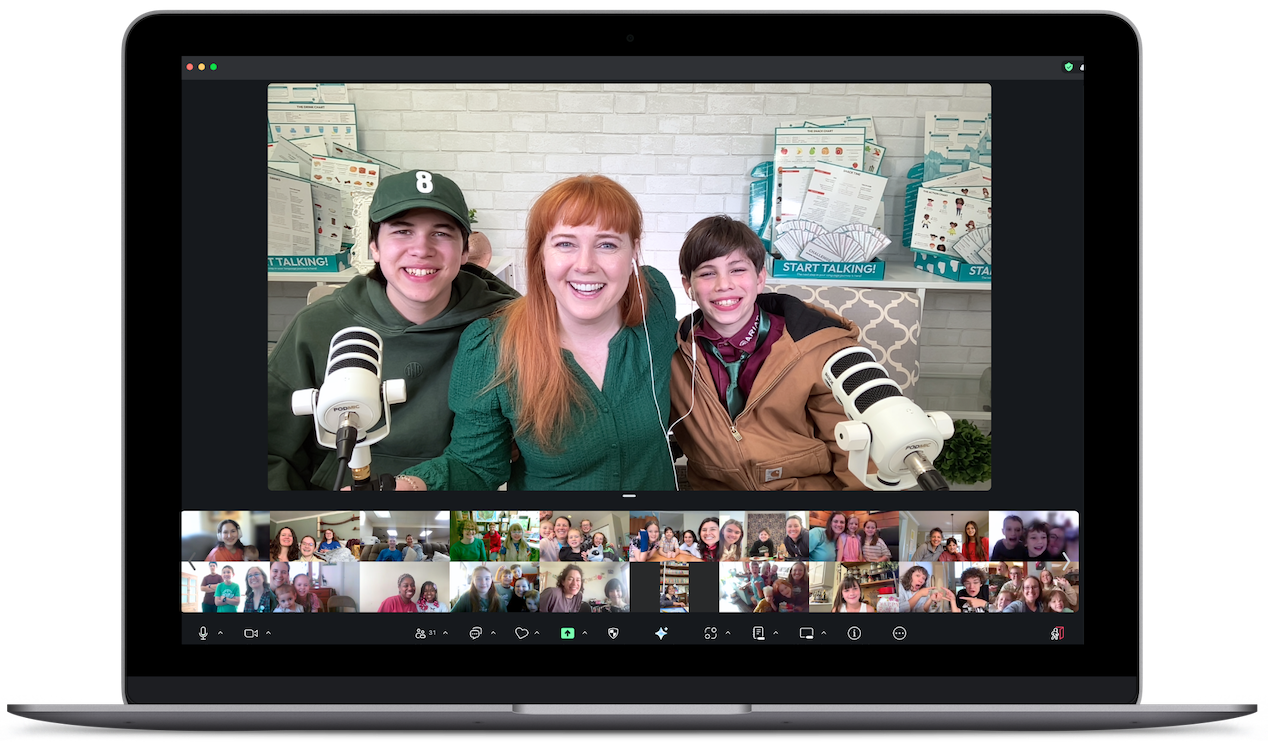
Move through your boxes at a record-level pace with record-level fun!

Leave a comment