
If you want your child to speak a foreign language…
But you can tell you care more than they do…
And it’s starting to feel like you’re dragging them into something that should feel joyful…
You don’t need to push harder.
Rather, when we draw forth a child’s desire instead of pushing our desire onto them, progress becomes lighter. Faster. More sustainable.
In Part 1, we talked about enticing your child — helping them want to be part of this.
Today, I’m going to show you something just as powerful that will have your child wanting to speak — even before the language feels meaningful to them.
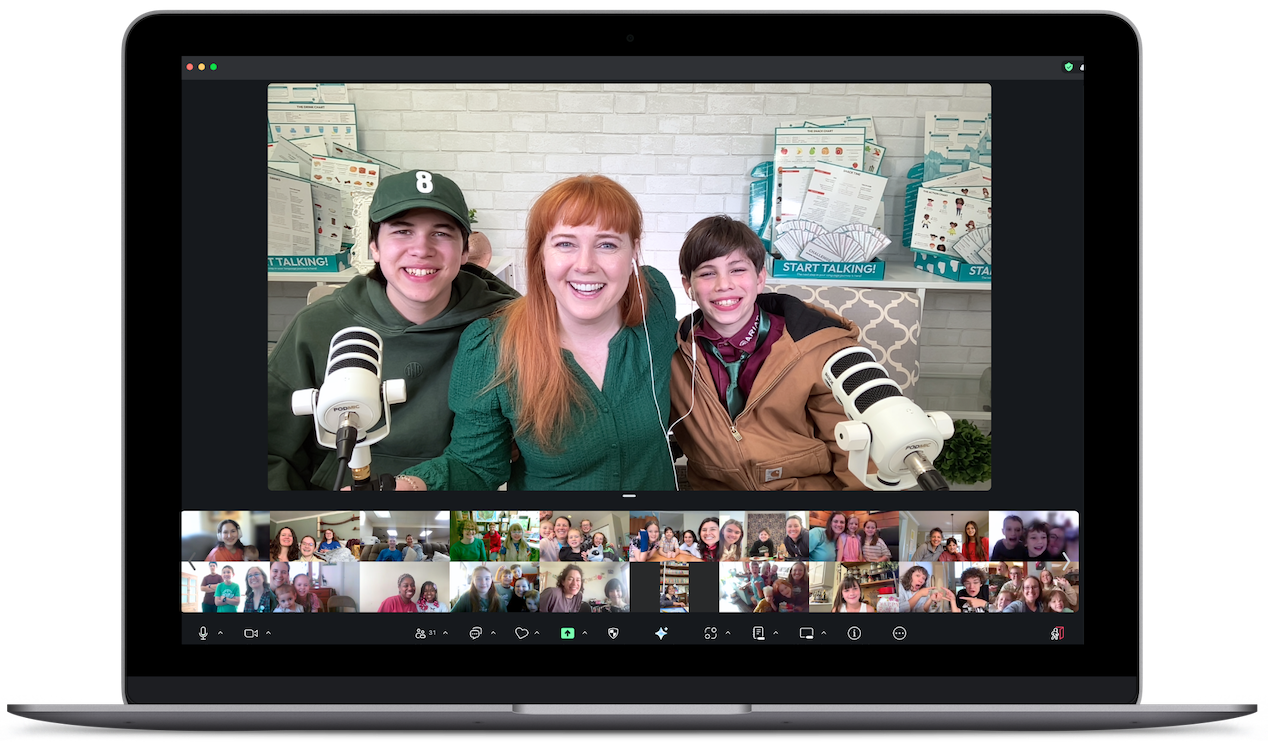
Hey, I’m Adelaide from TalkBox.Mom, where we help families start talking in a foreign language the same day they start the program.
What I want to talk about today is rewarding.
Before you tense up or think, “I don’t want to bribe my kids to speak a foreign language,” let’s make an important distinction.
Rewarding is not bribing.
Bribing is something people use to stop a bad behavior.
“If you stop yelling, I’ll give you this.”
“If you behave, you can have that.”
It’s reactive. It’s trying to control behavior in the moment.
Rewarding is different.
Rewarding is setting something meaningful in front of your child and letting them work toward it through consistent effort.
That’s a big difference.
When your child tries to use a phrase…
Plays the native speaker audio before, as, or after they say a phrase…
Finishes a Practice Session without complaining…
That’s effort you can reward again and again.
You’re communicating something powerful:
“I see you.”
“I value your work.”
“Your effort matters.”
Here’s what most families get wrong.
They reward the result instead.
Perfect pronunciation.
Saying the phrase without the audio.
Remembering everything flawlessly.
At first, that sounds reasonable, but here’s what happens.
If a child knows they’ll only be rewarded for doing it perfectly…
They start calculating.
“Can I say this well enough?”
“Will I mess this up?”
“What if I don’t get it right?”
If they don’t feel confident they can win…
They hold back, they speak less, they avoid longer phrases, they choose the easiest option, or they stop trying altogether.
Because trying and failing means no reward.
When we reward effort instead…
Trying is always a win.
Listening again is a win.
Attempting the long phrase is a win.
Mumbling through it and laughing is a win.
When effort is safe, effort increases.
When they try more, they improve faster.
Kelley on our team does this beautifully. She created a chart based on how many Practice Sessions her kids complete — and what they can earn. She also created a separate chart for actually using their phrases in real life.
The rewards?
Movie theater tickets, simple experiences—things her kids genuinely care about.
Some of our Fluency Families keep it even simpler.
They have a jar, and every time someone tries to use a phrase, a pom pom goes in.
When the jar fills up?
They get ice cream, family movie night, or a special show together.
Other families give 10 extra minutes of screen time for video games, tablets, or watching a movie if their kids complete a practice session.
I have done that and my kids beg to do their practice session.
Yeah, they want 10 more minutes!
Small rewards work.
Why?
Because a child can put forth effort — and immediately receive something they want.
Even if the language doesn’t feel meaningful yet, you’re building momentum.
And here’s the long game.
As they use the language more…
As they make connections with other people…
As they help someone…
As they make a friend in the language…
As they experience success…
The reward shifts.
It becomes internal.
You’ve got confidence, connection, pride (the good kind), and progress.
That’s when something changes.
They’re no longer speaking because of the pom pom.
They’re speaking because it feels good.
The ultimate reward?
Working through your boxes and then going on a trip where they get to use their phrases in real life.
That’s when it clicks—but we don’t start there.
We start small, we reward effort, and we draw forth desire.
Not by pushing, but by recognizing work.
If you try this out this week — even one small reward for one Practice Session — you might be surprised at how much more willing your child is to show up.
And that willingness?
That’s where fluency begins.
Read Part 3 here.

Move through your boxes at a record-level pace with record-level fun!

Leave a comment